Lighting as a Design Layer
The best landscape lighting is designed, not simply installed.
Fixtures should not be placed only where darkness exists. They should be planned in relation to the architecture, planting, hardscape, circulation, outdoor living areas, and the way the property is used.
For homes in Wayne, Villanova, Gladwyne, Bryn Mawr, Haverford, Devon, Berwyn, Newtown Square, and surrounding Main Line communities, this design sensitivity is especially important. Many properties include mature trees, stone paths, terraces, walls, hedges, pools, pavilions, and architectural features that deserve careful treatment.
Lighting should reveal those features without overpowering them.
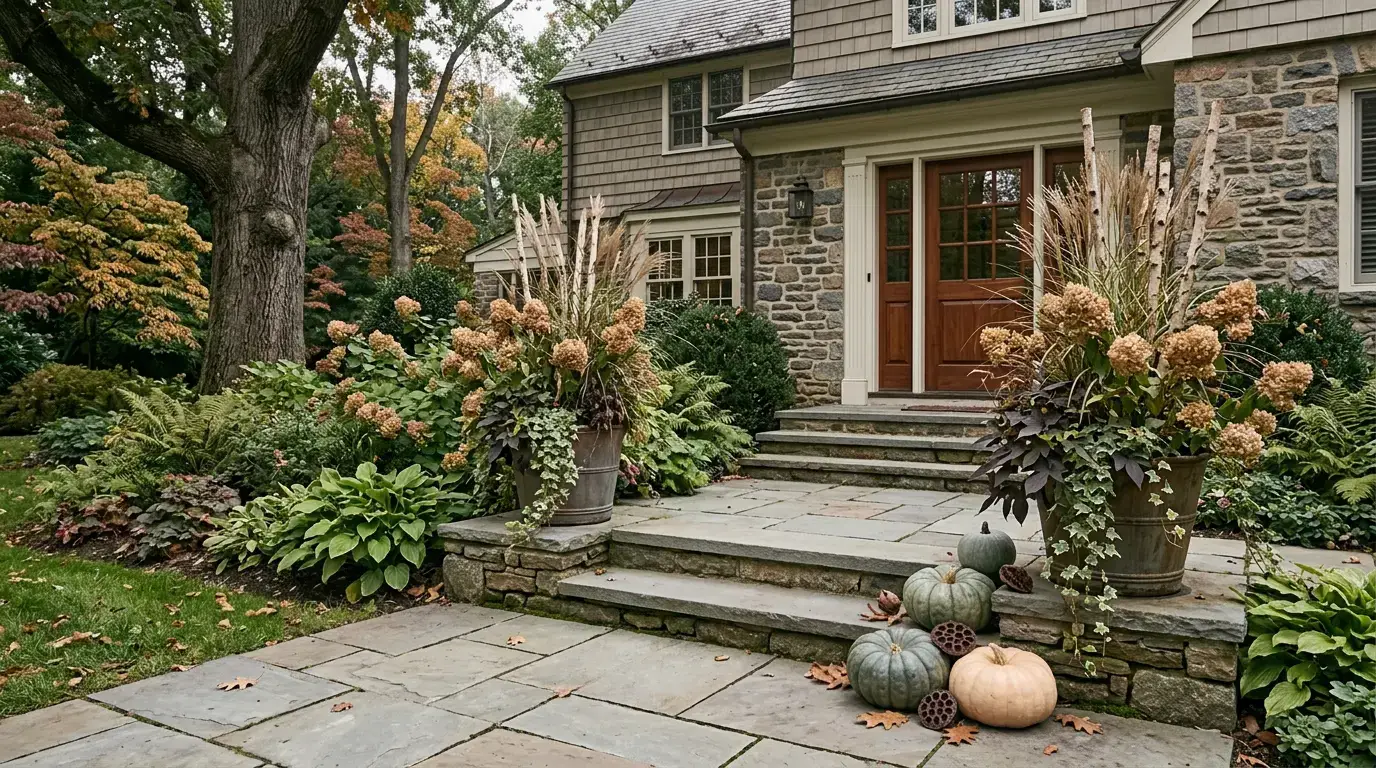
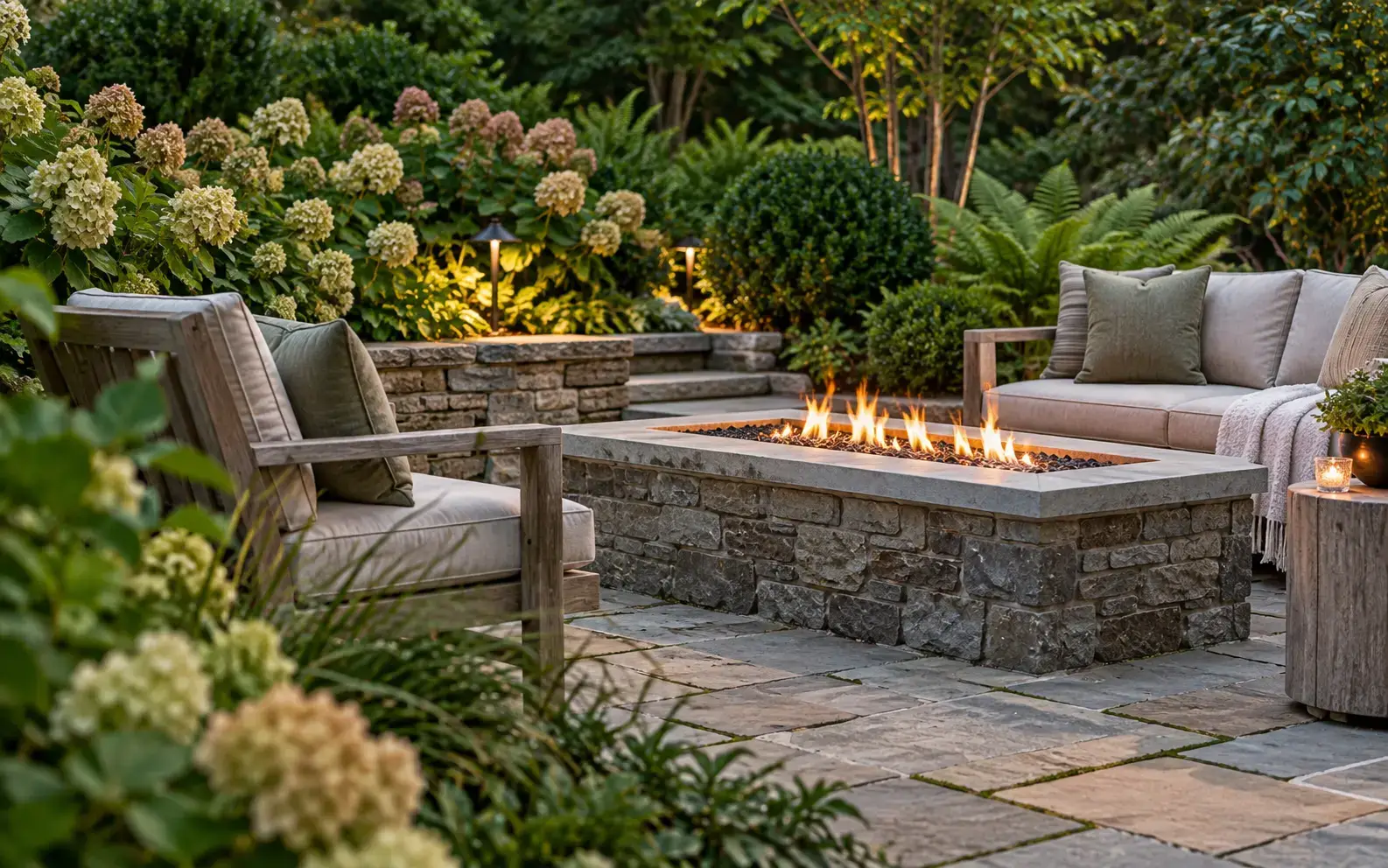
A softly lit path can guide guests from the driveway to the front door. Uplighting can bring dimension to a specimen tree. Subtle wall lighting can highlight stonework. Step lights can improve safety while remaining discreet. Terrace lighting can support evening dining without creating glare.
Safety, Atmosphere, and Outdoor Living
One of the most important roles of landscape lighting is safety.
Steps, grade changes, walkways, driveways, pool areas, and garden paths all need to be visible after dark. But safety lighting does not need to be harsh. The most effective lighting often uses lower levels of light placed with precision.
Landscape lighting also has an emotional effect. It changes the mood of the property. It allows the garden to continue after sunset. It gives outdoor spaces depth, warmth, and a sense of quiet drama.
This is especially valuable in October. As the season moves deeper into fall, homeowners often use outdoor spaces differently. Fire features become gathering points. Covered structures feel more intimate. Guests arrive in the dark more often. The landscape becomes part of the evening experience.
Terren’s Approach to Landscape Lighting
At Terren Landscapes, lighting is approached as an essential design layer.
The process begins with understanding the property: how people arrive, where they walk, what outdoor spaces they use, what architectural and landscape features should be emphasized, and how the home should feel after dark.
The goal is to create a lighting plan that supports safety, atmosphere, beauty, and long-term performance.
Because when the sun sets earlier, the landscape should not disappear.
With thoughtful lighting, it becomes beautiful in a different way.